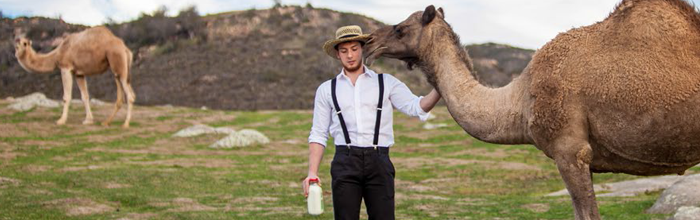
Walid Abdul-Wahad is owner of California-based Desert Farms. He was inspired to market camel’s milk in the United States during a visit to Saudi Arabia. There, he first tried the product, which is typically sold by nomadic Bedouins. Camel’s milk has been part of the Bedouin culture for millennia.
In modern times, many in the Middle East tout camel’s milk for various health benefits. Realizing there might be demand for it in the U.S., Walid established Desert Farms. He now works with a network of three Midwestern farmers—all Amish—who raise camels, package their milk and ship it to customers across the country. The milk is packaged in 16-oz plastic bottles, then shipped either fresh or frozen in insulated containers packed with dry ice.
To ensure quality, Walid needs fresh milk to be kept below 40 degrees Fahrenheit during shipping, and frozen milk ideally kept below 0 degrees. That’s a challenge, as multiple variables can impact the milk’s temperature while in transit. These variables include time of year (warm versus cold months), destination (warm versus cold climates) and shipping time (overnight versus ground).